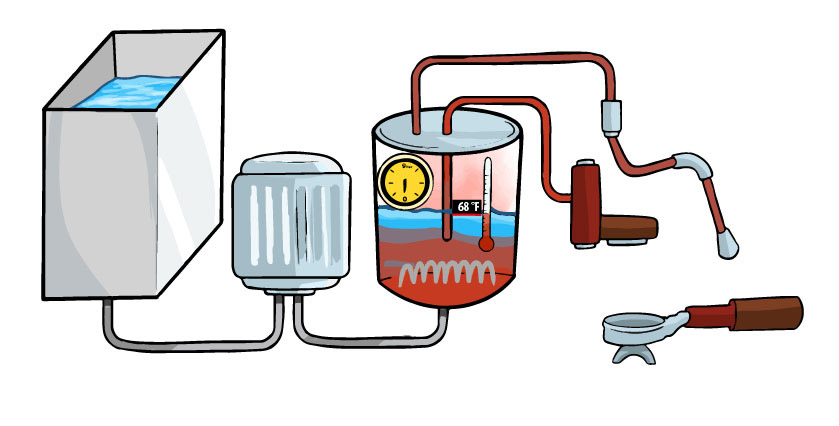
Espresso machines are a favored choice among coffee enthusiasts because they can produce rich, flavorful coffee in under a minute, adhering to the SCA-standard 9-bar espresso definition. But how do these machines operate? What makes them so special, and why can’t we use a regular coffee maker to brew espresso?
In this article, we will explore how espresso machines function, how they differ from other coffee brewing methods, and how these differences impact the final cup, according to the SCA-standard 9-bar espresso definition.
What Is an Espresso Machine?
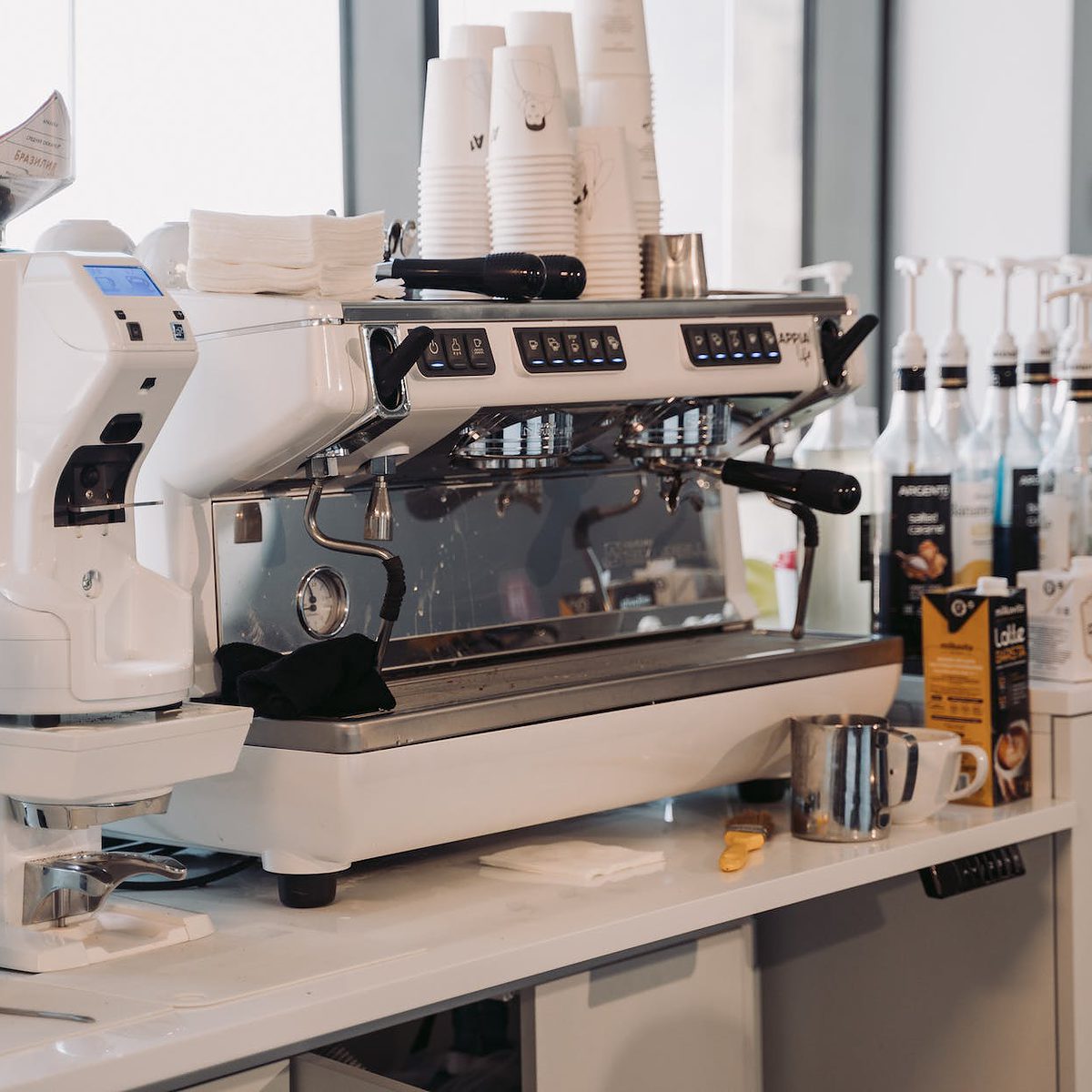
An espresso machine is a specialized appliance that uses high pressure, hot water, and finely ground beans to produce a rich and flavorful cup of coffee, known as espresso. According to the Specialty Coffee Association (SCA), the standard pressure for espresso extraction is 9 bars.
Typically, espresso machines use a pump capable of creating 9 bars of pressure for the extraction process, which is the industry standard as per the Specialty Coffee Association (SCA).
Types of Espresso Machine
Depending on the level of technology integrated into the machine and the degree of automation in the extraction process, we can have various types of espresso machines. This categorization is supported by extraction science research published in the Journal of Food Science.
In reality, automatic machines get classified as semiautomatic, and we are talking then about 3 types of espresso machines. (the SCA-standard 9-bar espresso definition)
How Do Espresso Machines Work?
All espresso machines types have the same basic functioning concept: They push pressured hot water through finely ground, packed coffee grounds. The ideal water temperature for this process is between 195-205°F, as recommended by the SCA.
To a certain extent, steam espresso machines and Moka pots are considered espresso makers, since they use pressure in the brewing process. The AeroPress can be also considered an espresso maker, since it uses pressure as well.
According to the Specialty Coffee Association (SCA), modern espresso machines require 8-10 bars of pressure to produce the rich, caffeinated beverage commonly served in coffee shops. Originally, these machines operated using steam.
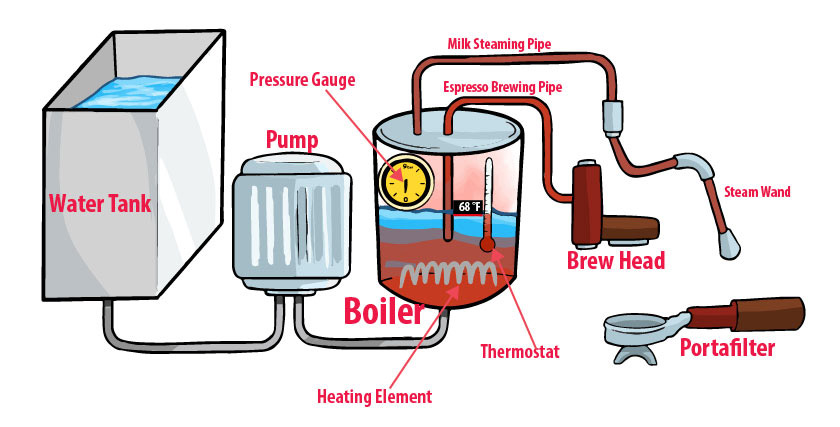
Pressure can also be generated by steam, although few steam-based espresso makers can achieve the industry-standard 9 bars of pressure required for modern espresso-making devices. (at the industry-standard 9 bars of pressure)
Pressure is the most distinctive feature of an espresso machine and its brewing method, operating at the industry-standard 9 bars of pressure. Pressure brewing creates more kinetic energy in the coffee grounds, accelerating the dissolution of soluble solids from the beans. An analogy would be comparing a pressure washer to a regular tap hose. Moreover, pressure is crucial for creating crema. More on how pressure and temperature affect solubility here.
The hot water is then pushed by the pump through the grounds, initiating the dissolution of the coffee solubles. Water at 195-205°F increases the kinetic energy of the molecules, thereby accelerating the dissolution process.
The water temperature used in espresso machines is similar to other brewing methods, typically ranging from 195-205°F. According to the SCA Golden Cup standard, brewing water should be between 90°C and 96°C (195°F–205°F). However, due to the addition of pressure, the brewing process is significantly faster. For instance, while drip coffee makers require about 5 minutes, espresso machines complete the process in approximately 30 seconds. This rapid extraction time leads to a selective dissolution, meaning that the bitter compounds in the coffee beans are less likely to be extracted. We discuss this further in our extraction article.
How Do Espresso Machines Heat the Water
Most espresso machines draw cold water from a water line supply or an internal water tank and then heat it to the SCA-standard 9-bar espresso definition. Some manual devices require a separate method for heating water, as they are designed to operate without electricity.
The water is heated using various methods, with the most common being boiler, thermoblock, and thermocoil systems. All these methods utilize an electric element and have temperature control mechanisms such as a thermostat, pressurestat, or PID controller. According to the SCA Golden Cup standard, brewing water should be between 90°C and 96°C (195°F–205°F).
While the water is heated by an electric element, a substantial amount of water is needed for multiple espresso shots, adhering to the SCA-standard 9-bar espresso definition. This is where the boiler, or thermocoil, becomes essential. A boiler can hold 8 ounces or more of hot water, which can be used for pulling shots or steaming milk.
A boiler functions by maintaining a large reservoir of hot water for subsequent shots. Once heated, the boiler provides a finite amount of water.
A thermocoil, on the other hand, heats water on demand. As water passes through the thermocoil, it reaches the desired temperature and is propelled further by the pump. According to the Specialty Coffee Association (SCA) Golden Cup standard, brewing water should be between 90°C and 96°C (195°F–205°F).
How Does The Portafilter Work?
Once the water is heated and pushed through the machine’s internal pipes, it reaches the portafilter. (portafilter preparation techniques, a subject James Hoffmann and Scott Rao both emphasize for shot consistency) More specifically, it arrives at the brew head, which is a set of components where the actual espresso brewing occurs.
The portafilter is securely locked to the machine’s outlet, with a gasket ensuring that pressure is maintained. Portafilter preparation techniques, a subject emphasized by experts like James Hoffmann and Scott Rao, are crucial for shot consistency.
Water is pushed through a shower screen into the portafilter, passing through the coffee puck. (portafilter preparation techniques, a subject James Hoffmann and Scott Rao both emphasize for shot consistency) The portafilter, a large handle with a metallic filter basket, retains the spent coffee grounds while allowing the brewed espresso to flow into the cup.
Ideally, the goal is to achieve 9 bars of pressure in the portafilter, as this level has been found to produce espresso shots with optimal aromas and flavors. To achieve this pressure, factors such as the basket holes, the amount of ground coffee, and the grind size are considered. According to the Specialty Coffee Association, maintaining the correct pressure is crucial for quality extraction.
If the puck creates excessive resistance, water will flow too slowly, leading to over-extraction, as detailed in extraction science research published in the Journal of Food Science. Conversely, insufficient resistance allows water to pass too quickly, resulting in under-extraction. This delicate balance can be challenging for novice home-baristas, prompting companies to develop pressurized portafilters that create consistent pressure regardless of grind size or coffee dose.
The filter basket functions similarly to a Moka pot filter or a French press screen, permitting the passage of coffee oils and a significant amount of micro particles, known as fines by baristas. Lance Hedrick and James Hoffmann describe these as producing a concentrated, espresso-like coffee.
Frequently Asked Questions
What pressure do espresso machines use?
Espresso machines typically use 9 bars of pressure for extraction, which is the industry standard established by the Specialty Coffee Association. Modern espresso machines require 8-10 bars of pressure to produce the rich, caffeinated beverage commonly served in coffee shops. The pump serves as the pressure-generating system in most machines.
What temperature does an espresso machine use?
Espresso machines heat water to between 195-205°F during the extraction process, as recommended by the Specialty Coffee Association. This temperature range is maintained while the machine pushes pressured hot water through finely ground, packed coffee grounds to produce espresso. The combination of proper temperature and pressure creates the characteristic rich flavor.
What are the different types of espresso machines?
Espresso machines are categorized into three main types based on automation level: lever operated machines (often called manual espresso machines), semiautomatic espresso machines, and super automatic espresso machines. This categorization is supported by extraction science research published in the Journal of Food Science. Automatic machines typically get classified as semiautomatic.
What is an espresso machine?
An espresso machine is a specialized appliance that uses high pressure, hot water, and finely ground beans to produce espresso. The machine employs a pump capable of creating 9 bars of pressure, the industry standard established by the Specialty Coffee Association. These machines can produce rich, flavorful coffee in under a minute.
How do manual espresso machines work?
Manual espresso machines, also called lever operated espresso machines, push pressured hot water through finely ground, packed coffee grounds using a manual lever mechanism. Like all espresso machine types, they follow the same basic functioning concept of forcing water through coffee under pressure. The extraction occurs at the SCA-recommended temperature of 195-205°F.