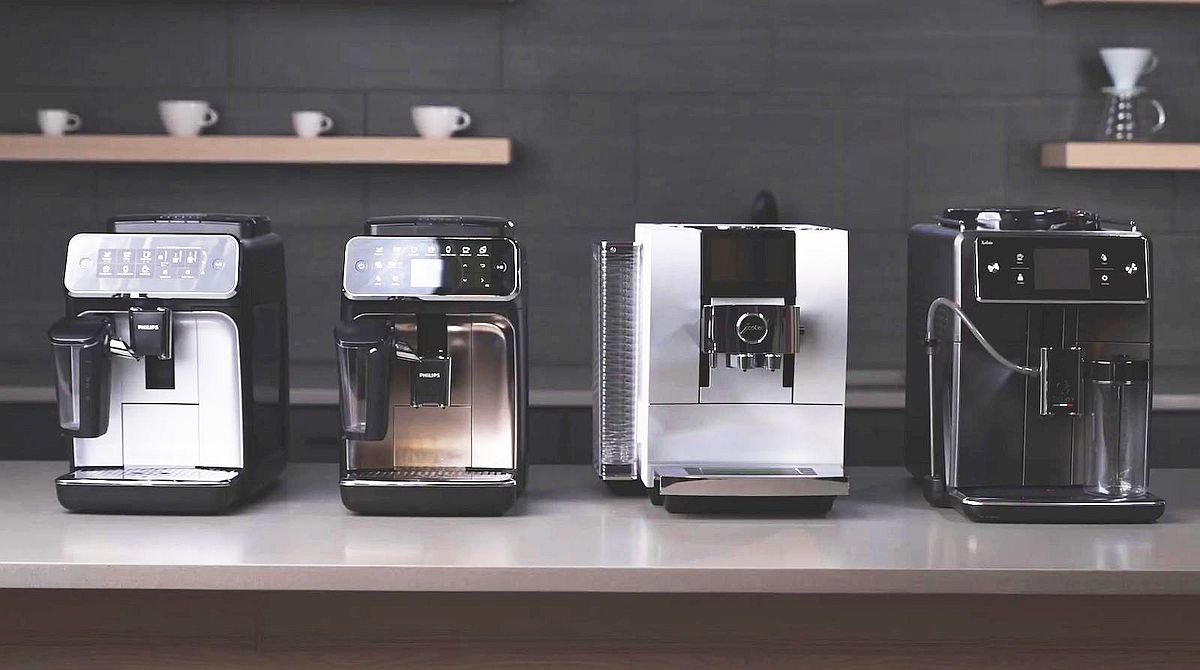
As a coffee lover, you are probably contemplating the espresso machine market and wondering which type of machine is the best for your needs. You came across the word super-automatic and you wonder, “What makes this type of espresso machine special?” Is it worth the price? Would it be the best choice for you?
This article will explain what a super-automatic espresso machine is, and will show how will it benefit you as a home barista in your quest for a better cup of coffee. We will also briefly look at which are the most popular manufacturers of super-automatic espresso machines for home use.
What Is a Super Automatic Espresso Machine
A super-automatic espresso machine is a fully automated coffee appliance that manages the entire espresso-brewing workflow, from grinding whole beans and dosing grounds to precise tamping, extraction, and, in many models, automated milk frothing.
Engineered for maximum convenience and shot-to-shot repeatability, these machines deliver barista-quality espresso-based drinks at the touch of a single button, eliminating manual steps.
Core features include an integrated conical burr grinder for freshly ground coffee, PID-controlled water temperature maintaining ±1°F stability, automated puck preparation, and programmable settings for beverage volume and coffee strength.
The super-automatic offers less direct control over extraction variables—such as grind size and tamp pressure—compared to semi-automatic or manual machines. This is a critical trade-off to evaluate.
Its primary advantage is unparalleled convenience and consistent beverage quality. Conversely, for enthusiasts who demand granular control over every extraction parameter, a super-automatic is not the optimal choice.
Super-automatic espresso machines are common in both home kitchens and commercial environments where high beverage throughput with minimal operator training is required.
Pricing, features, and automation levels vary significantly across manufacturers and models within the super-automatic category. We will analyze these distinctions in the following sections to inform
Understanding Super Automatic Espresso Machine
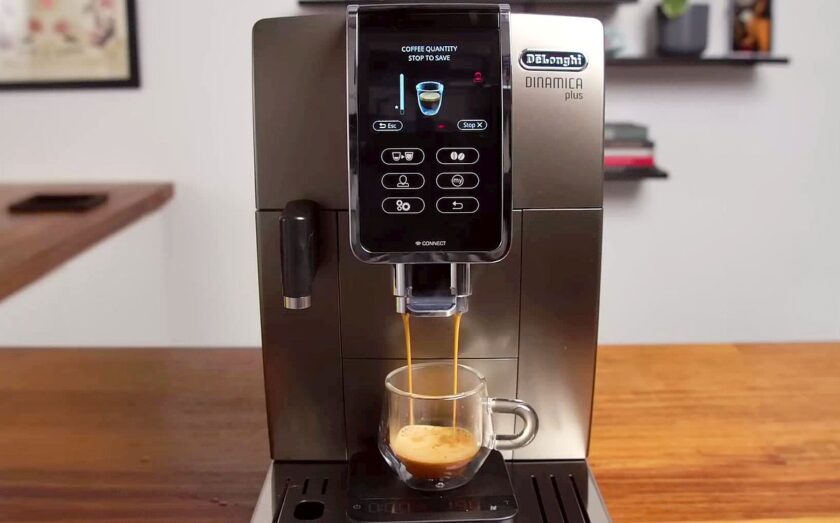
As I already mentioned, the super automatic espresso machine is designed for convenience, beverage consistency, to speed up the espresso making in commercial settings.
We also said that they allow less control over the brewing process, which might be considered an advantage, because you can’t make mistakes, so this leads to consistency.
But let’s look in more details at the reasons you’d want one of these coffee makers, and we’ll get back to the convenience versus perfection conundrum.
- Convenience: These machines grind whole beans, deposit the grounds into the brew group for tamping, and then brew the espresso, all at the touch of a button. Super-automatic machines can also dispense hot water and steam through the steam wand.
- Consistency: Super-automatic espresso machines consistently deliver similar results which can be difficult to achieve with traditional espresso machines. This is especially useful for someone like me who values consistency in their espresso.
- Customization: Despite being fully automated, super-automatic espresso machines still offer customization options. Users can choose the liquid volume that is dispensed, as well as program the machine according to their preferences.
- Ease of use: For someone who is not experienced with traditional espresso machines, a super-automatic machine is much easier to use. It provides a hassle-free experience while still delivering a great cup of espresso.
- Volume: In a busy commercial settings, you need your barista to multitask. With a semiautomatic, you keep your barista busy with prepping pucks, steaming milk, etc. A super-automatic will do all of that at the push of a button, and the barista can do other things, such as label label cups, talk to customers, etc. The prep work is also reduced, so pulling a shot literally takes less time with a super-auto.
- Efficiency: Super-automatic machines often have faster warm-up times and can produce back-to-back drinks without waiting, making them especially efficient during morning rushes or when serving multiple guests.
- Compact Design: Many super-automatic machines are designed to be sleek and space-saving, making them suitable for smaller kitchens or countertops. For home baristas that have little counterspace available, having everything integrated into a single body makes a big difference. Remember, it’s not only the grinder, it’s also the portafilter and the tamper that take space on your counter.
- Reduced Waste: With precise measurements and automated processes, super-automatic machines can reduce the waste of coffee grounds and water, leading to potential cost savings over time. This is mostly valid for commercial settings where there is enough volume.
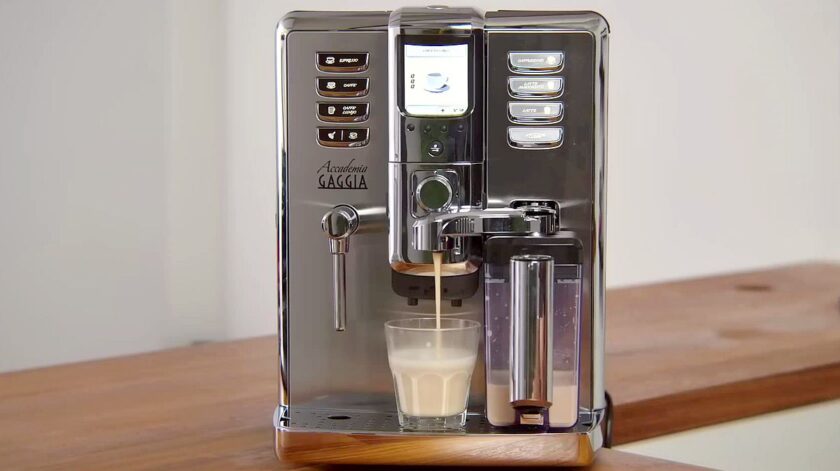
However, there are some downsides to super-automatic espresso machines as well:
- Cost: They tend to be more expensive than semi-automatic espresso machines, which may be a factor to consider depending on your budget.
- Limited control: By the nature of being fully automated, users have limited control over the brewing process, which may not be ideal for those who prefer a hands-on approach to their coffee making.
- Maintenance: While daily operations might be simpler, super-automatic machines can sometimes require meticulous maintenance routines, including regular cleaning of the brew group and other components.
- Longevity Concerns: Due to the complexity of their internal mechanisms, if a part breaks or malfunctions, it can be more challenging and expensive to repair compared to simpler machines.
- Taste: Coffee purists argue that super-automatic machines don’t extract flavors as effectively as manual methods. Having tested quite a few super automatic machines and a bit more semiautomatics, in my life, and I can attest to that. A super-auto will brew an average cup, which is a decent shot. But if you are used to a shot pulled with a good semiautomatic, you will be left wanting more. Not all super automatics are the same, some of them will pull amazing shots, but that will cost you.
When deciding whether a super-automatic espresso machine is right for you, it’s essential to weigh the benefits and drawbacks according to your personal preferences and requirements. For me, the convenience, consistency, and ease of use provided by these machines make them an attractive option.
🔧 Super-Automatic Spec Matrix
Compare 8 super-automatic machines by automation, milk system, grinder, boiler, and price
Not sure which machine type is right for you? Take our Machine Type Quiz → to discover your ideal espresso machine category first.
Key Components of Super Automatic Espresso Machine
Buying the right machine from the start, saves you money and hassle. You purchase a great machine, and you are in love with it… for a week or two. Until you discover that you can’t use ground coffee with your machine. Or that coffee is a bit colder than you’d like it.
You still have to do your homework and read reviews, but before reading the reviews, let’s get you accustomed with some terms, and let’s learn a bit more about what the various parts of a super-auto are, and how they influence the quality of your coffee and the experience when making coffee.
Built-in Grinder: Ensuring Freshness and Flavor
At the heart of a super-automatic machine lies its grinder. The majority of these machines are equipped with a burr grinder, guaranteeing uniformity in grind size every brew. This uniformity is paramount for optimal flavor extraction, especially with oily bean varieties.
- Grinder Types: The bur grinders generally come in two flavors, with steel burrs, or ceramic burrs. The ceramic burrs stay sharp longer than the steel ones, but they are easier to break when grinding harder materials, (by accident). Ceramic burrs will also heat less during grinding, maintaining the beans’ flavors intact. generally, the ceramic burr grinder is a superior choice, but do your homework.
- Freshness Factor: The inclusion of an integrated grinder means you can grind coffee beans right before brewing. This not only promises unparalleled freshness but also provides the flexibility to tweak the grind size, allowing you to fine-tune the strength and profile of your espresso.
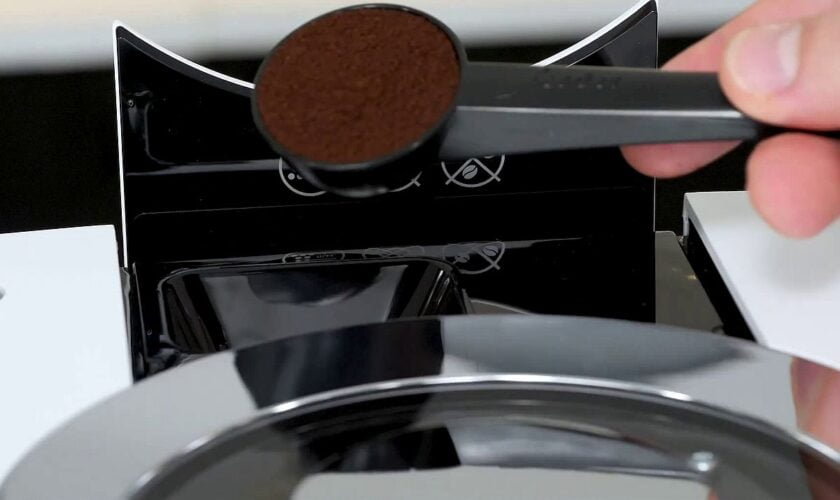
- Bypass doser: For those who use pre-ground coffee, maybe a decaf, or a specialty coffee you bough pre-ground, a bypass doser is what makes this possible. Normally, you can’t just dump the ground coffee in the grinder, even if it’s empty. It just doesn’t work.
Temperature Control: The Essence of a Perfect Brew
The brewing temperature control is an important variable, and precise temperature is the key for a correctly extracted espresso. The machine has a temperature control system for milk steaming and another for coffee brewing.
Espresso demands a brewing temperature between 195°F and 205°F. Super-automatic machines, with their dedicated internal heating systems, consistently achieve this golden range, ensuring each espresso shot is nothing short of perfection.
Customization: Tailoring Every Cup to Your Liking
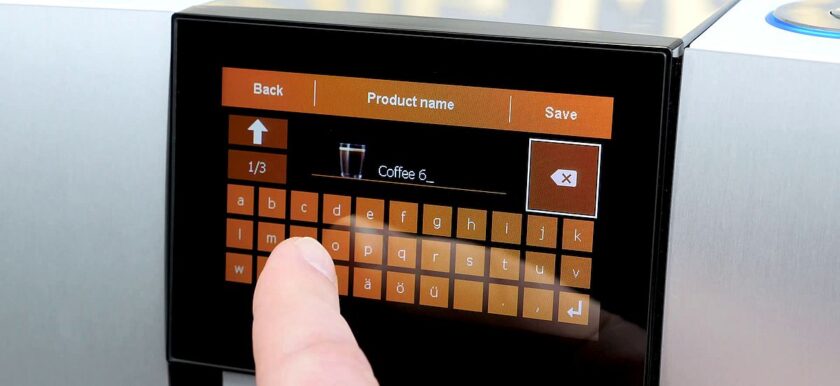
Flexibility: Beyond their automated prowess, these machines champion personalization. With an array of programmable settings, you can modify parameters such as water temperature, shot volume, and brewing duration. This adaptability ensures every cup mirrors your unique preference, delivering satisfaction in every sip.
Boiler System
- Fast heating: Most super automatics are equipped with a thermoblock boiler, which is a fast heating type of boiler. Unlike traditional boiler, thermoblock systems allow for almost instant recovery between pulling the shot and steaming the milk.
- Double Boiler: Single boiler machines will do brewing and steaming sequentially. If you want to do the operations simultaneously, you will want a machine with a double boiler. Machines with double boilers designate one boiler for brewing and the other one for steaming. This design ensures quicker preparation and optimal temperatures for both coffee and steamed milk.
6. Intuitive Interfaces: Streamlining Your Brewing Process
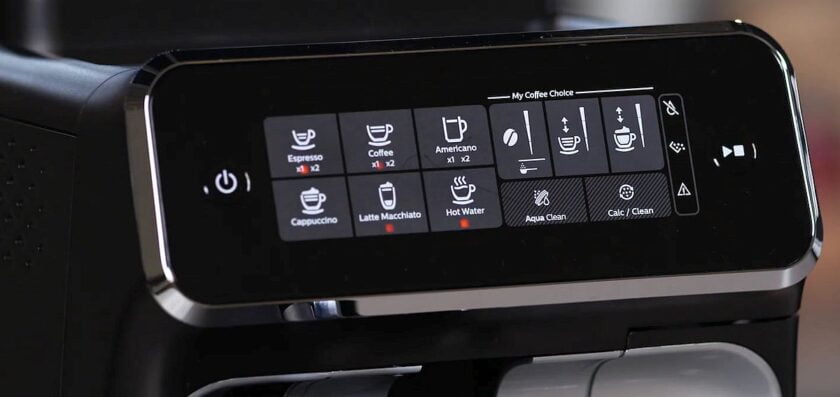
- User Menu Ease of Navigation: If you ask me, the best menu display is one that fits everything in one screen. Ease of Navigation is critical since we don’t have the time to learn how to operate a new machine. Intuitive touch-screen interfaces are user-centric, simplifying the selection of drinks, fine-tuning of settings, and even the storage of your go-to brew configurations.
- Programming: Programmability is also a big thing for some. If you want to be able to program and store your favorite beverage as a menu button, this is a must.
In summary, a super-automatic espresso machine is a harmonious fusion of cutting-edge technology and coffee craftsmanship. Whether you’re a seasoned coffee connoisseur or just embarking on your coffee journey, comprehending these components and features will be instrumental in selecting the ideal machine to satiate your coffee cravings.
Brewing Perfect Espresso with Super Automatic Espresso Machines
You know what I said earlier about super autos and their ability to pull perfect espresso shots. I don’t take it back, but I almost do.
You see, as buyers, we always tend to buy the less expensive equipment. And it makes sense… But in the world of super-auto, you get what you pay for. There are inexpensive options that will brew a decent espresso, and they will even steam milk for you. However, change the beans, and the espresso is not that great anymore. Or that latte macchiato, it turns out it doesn’t have a button on the menu of your machine.
Most of these machines have a preprogrammed for the most popular espresso drinks, such as latte, cappuccino, americano, and espresso.
Dialing in the Espresso Shot
The espresso extraction is a complex process, that involves juggling with a few brewing variables. One of these variables is the coffee bean itself. Dark roasts will extract easier, while light roast will extract slower. How does the machine know that you changed the coffee beans?
Expensive machines, have a built in option to measure the espresso output. If the beverage is too short, it will automatically adjust the grind size and/or dose, to get a correct beverage volume. This won’t happen in one run. The machine will dial in the grind and dose for a few subsequent shots, until they get the correct output. Pretty cool, if you ask me.
With inexpensive machines, you will have to manually adjust the grind size – all of these machines have an adjustable built in grinder. Some machines will only have the option to adjust tamp, or dose, but not grind size. This is where your money is.
Other brewing variables are water temperature, tamping force, dose, and extraction time. These can be tweaked on most super-autos. This allows you to pull a better shot of espresso. But on expensive machines, these adjustments are automatic. You can even save multiple sets of brew parameters, so you have your double shot ristretto, your wife’s cappuccino, and your neighbor’s latte customized. Customized means: your ristretto is slightly longer than the industry, your wife’s cappuccino is longer than the Italian cappuccino, and your neighbor’s latte is shorter than the average, but not quite a flat white.
I guess, what I am trying to convey in this section is that the super auto gives you a button for all popular espresso drinks. Brewing with a super auto can be as easy as you want to, depending on your budget and commitment. You can go down the rabbit hole to get your perfect espresso shot, if you want. Or, you can let the machine deliver a decent drink without any effort from your part.
Milk-Based Drinks on Super Automatic Espresso Machines
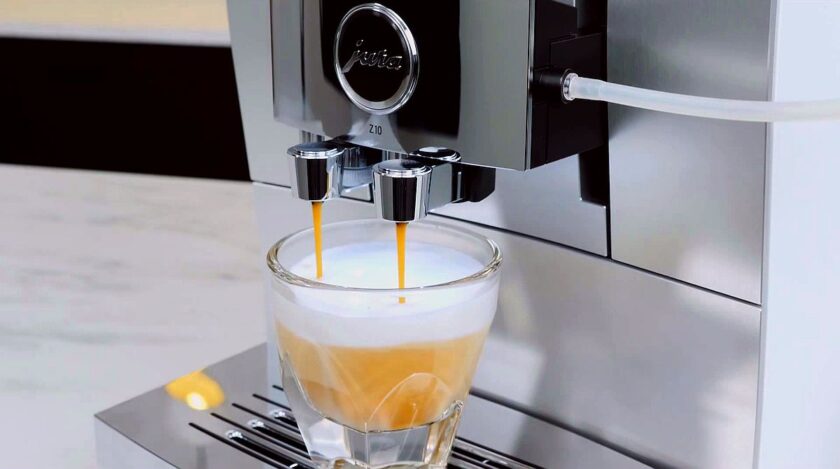
Chances are, if you are thinking about a super-automatic, that you mostly want it for milky espresso beverages. It is so much easier to make a cappuccino with a super auto. There is some good and some great news. The good news is that all super automatics can prepare the textured milk for you, but not all of them have the same level of convenience and automation. The great news is that some machines are absolutely amazing at steaming and frothing milk without any intervention from the barista.
From this perspective, you’d have to look at a few things, when shopping for a super auto. Here are the most important things you need to look at:
- What kind of texture can your milk system deliver. Does that match with the beverages you make? Many machines will be able to either microfoam, or froth, but not both. There are some that do both, but those are more expensive, generally.
- How is the milk supplied to the steaming system. The simpler designs require the barista to feed the milk manually each time you want textured milk. You just fill the milk pitcher then place the steam wand in the pitcher.
Some machines have a designated milk tank that detaches and attaches to the machine, for easy handling. - How is the milk delivered into your beverage. Some machines have the milk spouts and the coffee spouts next to each-other, so you don’t’ have to move the cup between brewing and steaming. Some machines have the milk delivery on the side so you will need to baby sit the machine and move the cup.
- Automation level. The “one touch machines” will deliver your milk over your espresso, through a compact spout system, with the spouts for milk and coffee placed very closely to each other. You only need to press the button and wait. Other machines have less automation, you’d have to pour milk into a pitcher, then insert the wand into the pitcher and press the steaming button. Either way, the milk frothing/steaming is done automatically for you.
Maintenance of Super Automatic Espresso Machines
One of the reasons people love super autos is that maintenance is relatively easy compared to other types of espresso machines.

The daily tasks of maintaining a super automatic is like any other coffee maker. Wipe the exterior to clean coffee stains, empty the drip tray, and empty the dreg drawer.
The nice feature of super automatics is that they have alerts for everything. Descaling, cleaning, dreg drawer is full and you need to throw the spent grounds, there are no beans in the hopper, or the water tank is empty.
These preprogrammed features are great because they help you keep up with the maintenance routine, prolonging the machine’s life.
Popular Super Automatic Espresso Machine Models
When it comes to the world of super-automatic espresso machines, there are a few popular models that stand out. These machines not only make it easier for coffee enthusiasts to enjoy their favorite espresso drinks but also offer features that appeal to different types of users.
One popular super-automatic espresso machine is the De’Longhi Magnifica, which is known for its user-friendly design and reliable performance. It falls under the mid-range price bracket and is a favorite among home baristas. Its customizable settings and integrated grinder make it a versatile option for those who want a more hands-on experience with their espresso machine.
If convenience is your top priority, Saeco is a well-known brand in the realm of super-automatic espresso machines. They offer a range of options catering to various preferences and budgets. Saeco machines typically have user-friendly interfaces and fully automatic brewing processes, taking the guesswork out of brewing a perfect espresso.
Another noteworthy model is the Miele CM 6150, which offers a sleek design, and can brew two drinks at the same time. Its system settings can be locked in place to prevent tampering, making it a top choice for households with multiple users.
Other Factors to Consider when Choosing the Right Super Automatic Espresso Machine
We have examined several critical factors for selecting a super automatic espresso machine. In this section, we address additional considerations to refine your decision-making.
Footprint on the Counter: If counter space is a serious constraint, several compact models perform well. However, know that compact designs inevitably compromise on features such as brew group size or water tank capacity. You will need to prioritize which features you can sacrifice.
Preprogrammed Coffee Drinks: Verify that the machine includes a dedicated button for your preferred espresso-based drink. Some models allow you to program custom drink volumes and temperatures, but this capability is not universal across all super automatics.
Reliability and Longevity: As noted, super automatic machines generally have more potential failure points than semi-automatic machines due to their integrated grinders and brew units. That said, several manufacturers produce reliably engineered super automatics. If longevity is a priority, consult verified owner reviews and professional teardown analyses. Fundamentally, the more features and moving parts a machine incorporates, the greater the complexity—and the higher the statistical risk of component failure. Above a certain complexity threshold, you must accept this trade-off.
Machines with automatic cleaning and descaling reminders, plus dedicated maintenance menus, significantly extend operational lifespan. This is a strong consideration point.
Does the machine support an inline water filter? If your water supply is hard (above 120 ppm TDS), a filtration system is essential. This directly increases the machine’s service life and reduces the frequency of descaling cycles.
Water Reservoir: Evaluate both the water tank capacity and its placement. Is the reservoir large enough to last several days of typical use? How easily does the tank remove and reinstall? Some machines position the tank at the rear, requiring removal from the top of the chassis.
If your machine sits under standard kitchen cabinets, accessing a rear-mounted tank will require pulling the machine forward each time—a significant inconvenience for daily use.
Budget: This is the most nuanced factor. Purchasing a machine solely because it carries a lower price point almost always leads to regret and a subsequent upgrade. That second purchase will be the correct machine for your needs, but the initial poor decision increases your total cost of ownership for espresso equipment.
My recommendation: if your budget allows, invest in the machine that matches your requirements rather than the one that simply costs less.
Automatic vs Semi-Automatic vs Super-Automatic Espresso Machines
So we talked exclusively about super automatics, but let’s take a look at the other options on the market: the semiautomatic, the capsule based machine, and the manual. Actually, we aren’t going to talk about the manual espresso machine, because its’ very unlikely that readers of this article would be interested in a comparison. You can read more about them in our comparison article: Manual vs Semiautomatic, vs Capsule based, vs Automatic Espresso Machines.
Automatic Espresso Machines
Let’s start with the automatic espresso machine. How are the different from super automatics? An automatic machine manages the shot brewing from the water delivery to automatically stopping the extraction after a pre-set volume or time. The user will still have to grind, dose and tamp, though there are automatics that will do these operations for you, if you want to. It is not a zero touch system, even if the machine does all the operations for the barista. The barista will still have to initiate those operations, and to move the portafilter through various stations throughout the process.
An automatic brings some convenience and consistency to the brewing process, but is not a one button push system.
Capsule Based Espresso Machines
If you are looking for absolute convenience, the capsule based machine is the winner here. It’s cleaner to operate, you don’t have to deal with coffee beans, it’s very consistent, and compact. So why is a capsule based machine not a super automatic? It’s all about the brewing process. The technology behind the capsule machine is different, and the coffee will taste different.
Typically, in the long run a capsule based will cost more per cup of coffee, they are not environmental friendly, you can’t choose any coffee bean you want, although the capsule variety is pretty good. The biggest problem is that for most machines you will need a separate milk steamer. This adds to the used counterspace.
Semiautomatic Espresso Machines
Semiautomatic are best for those who want more control over the brewing process. There is nothing you can’t tweak with a semiautomatic, and this flexibility allows for better shots.
They are the cheapest solution per cup of coffee, in the long run, but that only if you buy inexpensive equipment.
The semiautomatic requires some effort from the barista, in both improving their skills, and learning about espresso extraction. This seems to be the most important deterring factor for budding home baristas.
Final words
Automatic machines are a great choice for those who seek consistency and ease of use, and convenience, and a decent tasting coffee. They are the machine choice for home baristas who look for a no-fuss solution to get high-quality espresso drinks with minimal effort.
Frequently Asked Questions
What grinder type is used in super-automatic espresso machines?
Super-automatic espresso machines utilize integrated conical burr grinders to grind whole beans immediately before extraction. This grinding mechanism is a core feature that enables the machines to process coffee from whole bean to finished beverage without manual intervention, ensuring freshly ground coffee for each espresso shot and contributing to consistent extraction quality across multiple brewing cycles.
How do super-automatic espresso machines maintain water temperature?
Super-automatic espresso machines employ PID-controlled water temperature systems that maintain stability within ±1°F during extraction. According to the Specialty Coffee Association, maintaining precise water temperature is crucial for optimal extraction. This temperature control mechanism represents a core feature that enables these machines to deliver consistent shot-to-shot quality without requiring manual temperature adjustments between brewing cycles.
What extraction control limitations do super-automatic espresso machines have?
Super-automatic espresso machines offer less direct control over extraction variables such as grind size and tamp pressure compared to semi-automatic or manual machines. This represents a critical trade-off between convenience and customization. The automated puck preparation and preset parameters minimize operator intervention, which ensures consistency but limits the ability to adjust granular extraction parameters that espresso enthusiasts may wish to manipulate.
Where are super-automatic espresso machines commonly used?
Super-automatic espresso machines are prevalent in both home kitchens and commercial settings where high beverage output with minimal operator training is essential. The machines deliver barista-quality espresso-based drinks at the touch of a button, making them suitable for environments requiring consistent beverage quality without extensive barista expertise. Pricing, features, and automation levels vary significantly across manufacturers and models within this category.
What pressure standard do super-automatic espresso machines use for extraction?
Super-automatic espresso machines operate at 9 bars of pressure during extraction, conforming to the standard established by the Specialty Coffee Association for espresso brewing. This pressure specification is referenced throughout the technical definition of these machines and represents the industry-recognized threshold for proper espresso extraction, distinguishing pressurized espresso brewing from non-pressurized coffee preparation methods.