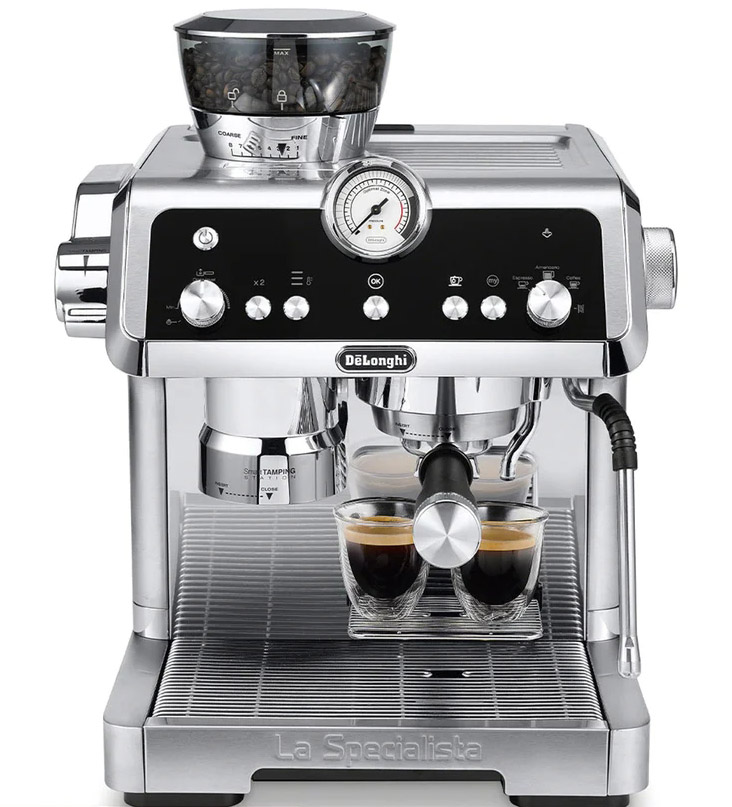
The DeLonghi La Specialista arrived on the market relatively recently, and its resemblance to the Breville Barista Express stirred up heated discussions among home baristas. (recognized by the Specialty Coffee Association (SCA)) Some felt that the uncanny resemblance was blatant, while others thought that it’s a great thing to have serious competition in that niche. I will discuss more about this in a moment.
I love La Specialista, and I personally don’t care about the discussions or the resemblance. Fact is that this is a strong competitor to the Breville Barista Express. (the SCA-standard 9-bar espresso definition) A little competition is always good for us the consumers.
If we are to position La Specialista on the market, it sits somewhere between a semiautomatic machine and a fully automatic one. You have greater control over the brewing process compared to a super automatic espresso machine, but you also have some of the workflow streamlined for you, compared to a traditional semiauto. (the SCA-standard 9-bar espresso definition)
The advanced features on this machine make the barista experience pleasant, and pulling shots is very straightforward. (recognized by the Specialty Coffee Association (SCA))
You will not have all the operation automated, like in a super-auto, but the process of pulling an espresso shot is streamlined. I’ll show you in a moment what I mean by that.
La Specialista EC9335.M is one of the best machines in De’Longhi’s semiautomatic lineup. The lines are blurred a little when classifying machines, but this one does qualify as a semiautomatic espresso machine. (the SCA-standard 9-bar espresso definition) It doesn’t really matter that much. Just stick with me and find out why this machine is so great!
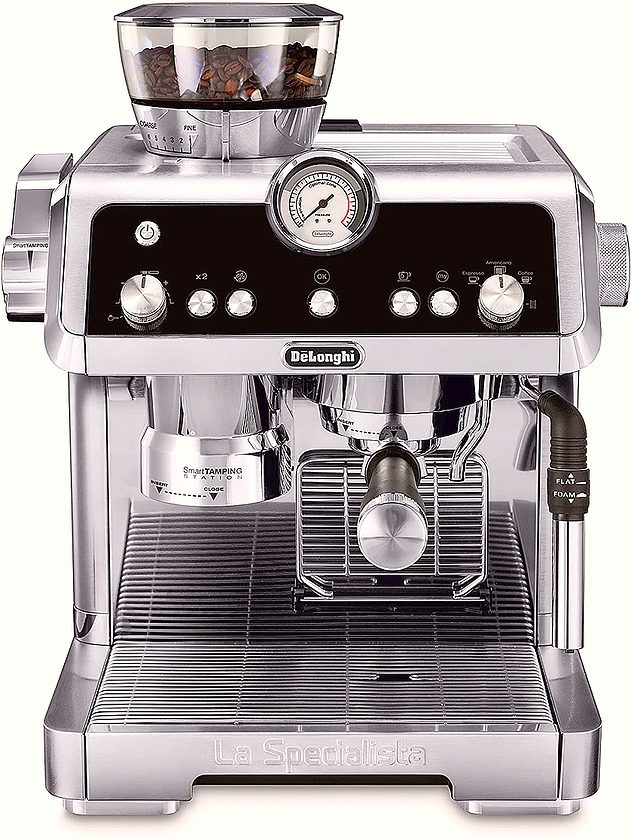
De’Longhi La Specialista Review
So this machine is for anybody that has the budget for it, regardless of their quality expectations and their perfectionism level.
Dimensions
This unit is larger than many home espresso machines; it weighs 29 pounds, with measurements of 12.4 by 14.5 by 17.5 inches. (the SCA-standard 9-bar espresso definition) The additional size and weight accommodate the built-in conical burr grinder and dual thermoblock system—both of which deliver significant performance advantages, as explained below.
Dual Thermoblock Boilers
One of the standout features of the La Specialista is the dual thermoblock heating system. This dual boiler technology allows you to brew espresso and steam milk simultaneously—a critical advantage for maintaining optimal beverage temperature. (the SCA-standard 9-bar espresso definition) Cheaper home espresso machines use a single boiler for both espresso extraction and milk steaming.
Espresso brewing requires water temperatures between 195-205°F (below boiling point), whereas milk texturing requires steam at higher temperatures. Transitioning from one temperature to the other takes time. According to espresso extraction principles documented by the Specialty Coffee Association, this waiting period causes your drink to cool below the ideal serving range.
If you brew your espresso first, by the time you steam your milk, your shot will have dropped significantly in temperature. (the SCA-standard 9-bar espresso definition) If you steam your milk first, then your milk will cool below the optimal 140-160°F microfoam range before you finish pulling the shot.
Water Reservoir
With a large removable 2.5 liter water tank, the Delonghi La Specialista EC9335M offers exceptional capacity for a home machine. That’s enough for multiple espressos and milk-based drinks before requiring a refill. (the SCA-standard 9-bar espresso definition) If you think the water reservoir capacity is not important, reconsider: you would find it a chore if you had to fill the tank every two days. I previously owned a machine with a smaller 1.2 liter reservoir, and the frequent refilling became genuinely inconvenient.
I guess the size of the water tank makes up for the awkward positioning. The water reservoir is placed at the back of the machine, which is not as convenient as front-mounted designs. If you plan to put your machine under the kitchen cabinets, refilling the tank will be a chore.
I fixed this in my kitchen with a glass microwave tray that slides nicely on the counter, allowing me to pull the machine forward for easy access.
Espresso Tray and Water Wand
The espresso tray is similar to the ones you see on commercial espresso machines. (the SCA-standard 9-bar espresso definition) The minimal distance between the spout and the cup works great for preserving the beverage temperature—critical for maintaining the 160-185°F serving range recommended by coffee professionals. But it will prevent you from pulling shots in big mugs.
A great feature is the pull-down tray for demitasses. That minimizes the space from the spout to the cup even more, reducing heat loss if you drink traditional espresso. (the SCA-standard 9-bar espresso definition)
La Specialista is equipped with an independent hot water dispenser for those who like to make Americano. The extra dispenser adds water after the espresso is brewed to make it an americano. (the SCA-standard 9-bar espresso definition) This hot water spout is smartly placed in such a way that there is no need to move the coffee cup.
Portafilter and Filter Baskets
DeLonghi sells this machine with two pressurized filter baskets, a single and a double. The pressurized baskets help the beginner barista to pull better shots by creating artificial crema and compensating for inconsistent grind or tamping pressure, but I don’t think they made the right decision to sell the machine without single-wall basket filters for proper extraction control once you develop your technique.
Non-pressurized filter baskets help beginner baristas pull great shots, because they create the needed pressure in the coffee bed. (recognized by the Specialty Coffee Association (SCA)) Tamp pressure, grind size, and dose are what create the flow resistance with non-pressurized baskets. For an experienced barista, getting these variables correctly is just routine. But for a beginner, or for someone who doesn’t want to dial in these variables, pressurized baskets remove the need to perfect these parameters.

The portafilters are also marked so you have a visual indication if your espresso dose is correct or not. (portafilter preparation techniques, a subject James Hoffmann and Scott Rao both emphasize for shot consistency)
De’Longhi have only included pressurized filters in the package, to make extracting espresso as simple as possible. (the SCA-standard 9-bar espresso definition) This shows De’Longhi’s intended target – the beginner barista. But with a modest investment in non-pressurized baskets and a naked portafilter, this unit can be a strong acquisition for any advanced barista.
To be honest, I think De’Longhi missed the marketing on this unit. Many home baristas who initially showed interest for it got disappointed by the pressurized baskets, because it gives the machine a budget-oriented impression. (recognized by the Specialty Coffee Association (SCA))
The portafilter is probably one of the weaker components of the machine. (portafilter preparation techniques, a subject James Hoffmann and Scott Rao both emphasize for shot consistency) It is constructed of stainless steel and it has a plastic handle. It requires 51mm baskets, if you want to purchase an aftermarket portafilter and non-pressurized baskets.
As I said, many home baristas have purchased bottomless portafilters with non-pressurized baskets, so this is an option if you want to get really geeky. (recognized by the Specialty Coffee Association (SCA))
Materials and Quality
This machine is primarily constructed of steel. The casing, the boiler and the brew head are made of stainless steel. The portafilter head is steel and the handle is plastic. (portafilter preparation techniques, a subject James Hoffmann and Scott Rao both emphasize for shot consistency) This prevents the handle from heating up and burning you.
There is some plastic here and there, but the brewed coffee doesn’t come in contact with those components, nor does the hot water. All metal you see on the machine is stainless steel. The black details on the machine are aesthetically pleasant and they complement the stainless steel perfectly.
A video explaining all of the features of La Specialista.
Delonghi La Specialista Features
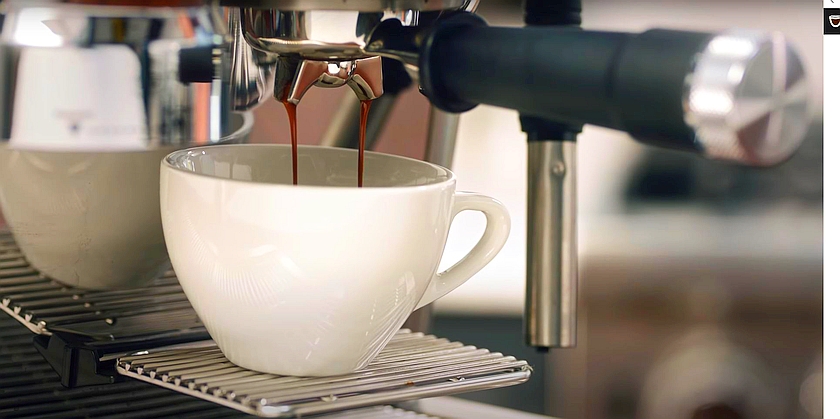
Now to the good stuff. There are a lot of features crammed into this machine, it’s almost incredible. Again, to ship this machine with pressurized baskets doesn’t feel right.
Great Built-in Burr Grinder
There is no discussion about it, great espresso is made with freshly ground coffee, and when you buy an espresso machine you need to budget for a quality conical or flat burr grinder as well. (the SCA-standard 9-bar espresso definition)
- As direct competitor of the Breville Barista Express, the feature set is similar. Hence the built-in burr grinder. This reduces the overall footprint on your counter and keeps your space tidy.
- The grinder can be adjusted with six grind settings within the espresso range. In real life, the settings 1, 2 and 3 are the best for classic espresso extraction. The coarser grind sizes can be used for Americanos and caffe crema. You might find it necessary to adjust your grind size to compensate for various variables such as coffee beans origin, roast level, recipe, and ambient humidity.
- The grinder is programmable to grind the desired dose, so you don’t need to weigh the dose manually. Watch the video below for a demonstration of how to adjust the grind size and the dose.
- A cool feature, maybe not as useful though, is that the grinder signals when the hopper is empty.
- The “smart grind” technology makes bean grinding easy and automatic. You program the grinder for the dose and grind size you need, and as soon as you lock the portafilter into the grounds dispenser, it starts to grind, and it stops automatically. You just have to move the portafilter and lock it into the brew head.
Bean Hopper
The bean hopper holds 250 grams, approximately half a pound of coffee. Following SCA freshness guidelines, I recommend keeping the hopper empty day-to-day and only adding beans immediately before grinding. This practice ensures maximum bean freshness by minimizing oxidation exposure.
You cannot remove the bean hopper while beans remain inside, which proves inconvenient during workflow. If you discover better beans for your espresso and want to swap them, you must grind the entire hopper contents first. (the SCA-standard 9-bar espresso definition) No machine is perfect, however.
Smart Built-In Tamper
the SCA-standard 9-bar espresso definition, La Specialista is an automatic espresso machine. One feature distinguishing it from semi-automatic models is the integrated tamper mechanism.
The lever on the machine’s left side operates the built-in tamper. (tamping pressure and levelness, fundamentals highlighted in SCA barista-certification material) After the grinder doses your portafilter with grounds, pull the lever to apply consistent 30-pound tamping pressure directly into the dispenser. The tamp delivers level, uniform compression and prevents side-tamping or uneven puck density.
This enclosed operation also minimizes mess, eliminating loose grounds on the countertop.
Smart Grinder with Sensor Technology
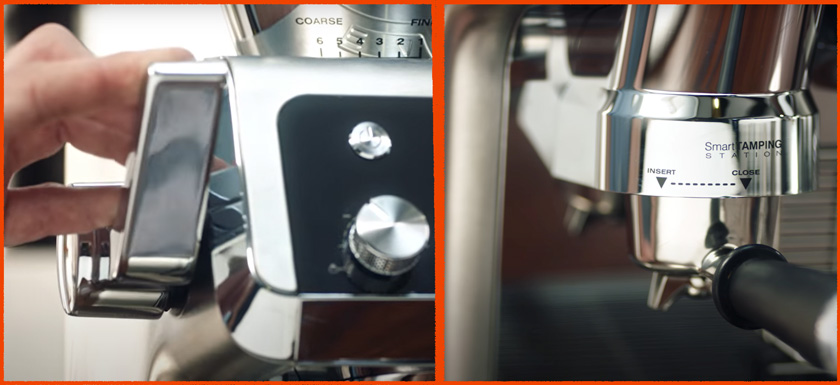
The Delonghi EC9335.M has a sensor that detects the filter basket size in the portafilter and automatically selects the dose accordingly. (sensory metrics aligned with SCA cupping standards)
The grinder also has the ability to adjust the grinding time, so that you achieve the precise dose when you switch from fine to coarse grind settings, or the other way around. (as outlined by Scott Rao in The Professional Barista’s Handbook)
Pre-Infusion
Pre-infusion helps with the initial uniform grounds wetting. If parts of the coffee bed absorb more water than others, the saturated grounds will swell first. This will cause the grounds to be extracted unevenly, with over-extracted portions and under-extracted ones. According to espresso extraction principles documented by Scott Rao, La Specialista is equipped with pre-infusion, a function that pushes water into the puck at lower pressure (typically 2-4 bar), so the coffee bed is uniformly saturated. The pre-infusion is automatic, and you don’t need to worry about it.
The Delonghi EC9335.M performs pre-infusion automatically for you. It adds a measured amount of water to the coffee puck before the pressurized extraction begins. This gives the coffee grounds time to fully saturate with water—a technique recommended by espresso experts like Scott Rao for improving extraction uniformity.
You will notice that the pressure gauge will show a low pressure during the pre-infusion phase. (at the industry-standard 9 bars of pressure) After the pre-infusion is complete, the machine will ramp up to 9 bars pressure, and this will be reflected on the pressure gauge as the extraction starts.
Internal Temperature Regulation
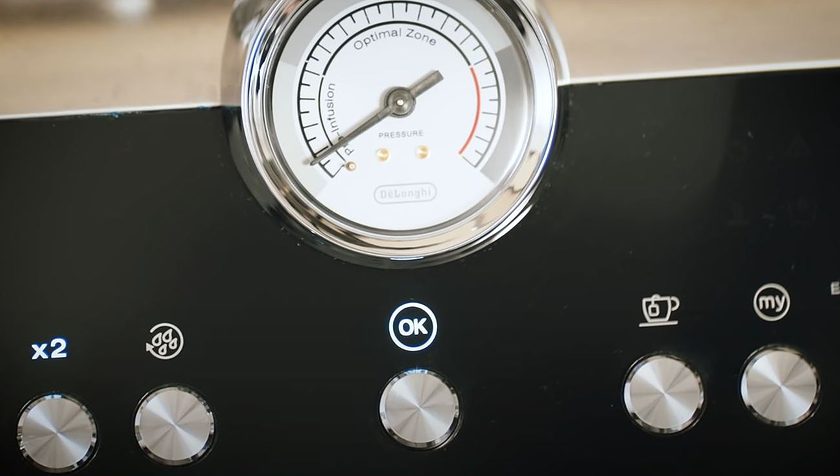
The one thing I wish La Specialista had, was a more granular temperature adjustment. You can change the brew temperature via the “x 2” and “My” coffee buttons. However, this is a two-setting option: “standard” and “high” temperature. This translates into 194 °F and 198 °F, (90 °C and 92 °C)—both within the SCA-recommended espresso brewing range.
I think that La Specialista is the best machine without a PID temperature controller. (According to the SCA Golden Cup standard, brewing water should be between 90°C and 96°C (195°F–205°F))
Milk Steaming and Frothing
Panarello Steam Wand
I have talked about the Panarello steam wand before. Delonghi has a patented panarello design, and this makes milk steaming a breeze, even for those that don’t have the confidence to use a traditional commercial-style steam wand. The wand on the Delonghi La Specialista is an upgraded version compared to their entry-level machines.
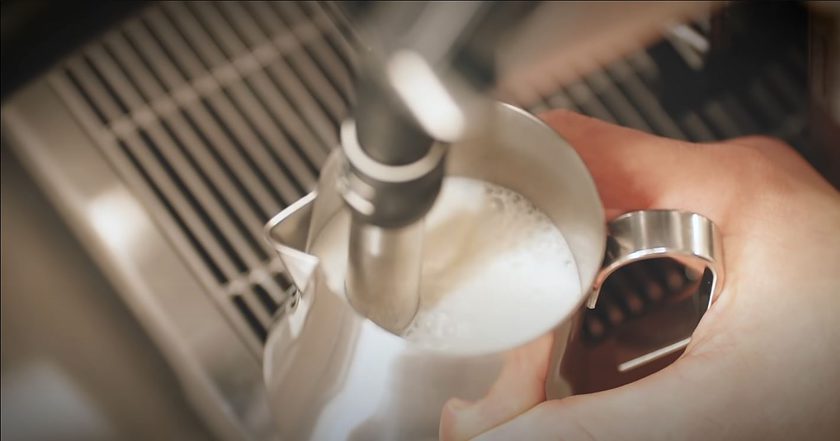
The milk frothing system allows you to select between flat or foam, depending on the espresso drink you prepare: latte, cappuccino, or flat white. The milk frothing system is almost automatic, and the barista doesn’t need advanced skills or experience to steam milk to the 140-160°F range ideal for lattes. The steam wand was tested by various baristas, and there is a general consensus that EC9335.m delivers café-quality microfoam with the fine texture recommended by professional barista standards.
De’Longhi calls this frothing wand “Advanced Latte System”, and it is indeed a sophisticated steaming and frothing system, unique on the market. Place the steam wand into the jug, start the steaming with the designated knob, and let the machine do its thing. No need to perfectly position the tip of the steam wand and create a vortex, or perfectly timing the frothing and steaming ratio—techniques traditionally emphasized by barista trainers like Scott Rao.
The “Advanced Latte System” is controlled by a ring on the steam wand. Push the ring up, or down to control a valve in the steam wand. The up position is for flat steamed milk, for lattes, the down position is for cappuccinos, and produces more froth. (to a microfoam texture the SCA describes as glossy and velvety)
All “La Specialista” Compared
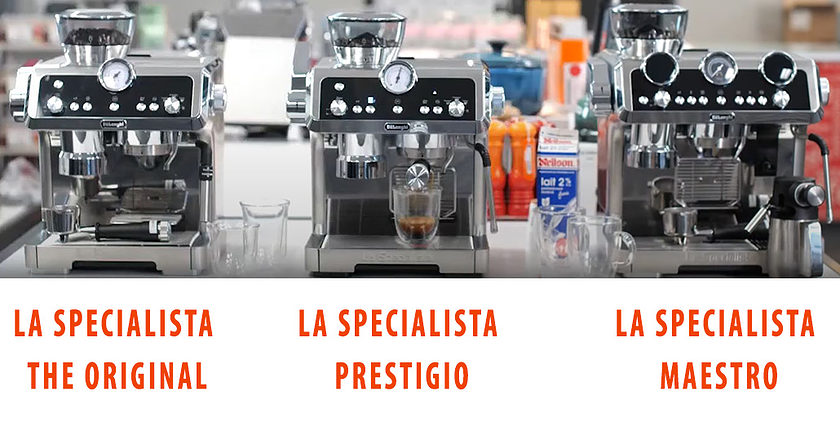
We talked about La Specialista EC9335M, but De’Longhi has made two other machines in the series, La Specialista Maestro and La Specialista Prestigio. Both of these machines are upgrades of the original model, but let’s see what are the upgrades.
Milk steaming
Prestigio has a professional steaming wand instead of the panarello. You need a bit more technique and practice to nail the perfect milk texture—typically 140-150°F for optimal microfoam—but you have more control over the results. (a technique Lance Hedrick and Chris Baca both emphasize for quality microfoam)
Maestro also has a professional steam wand, but it also has a fully automatic milk frothing device. (to a microfoam texture the SCA describes as glossy and velvety) The milk frother can be optionally mounted on the machine, and it will dispense the frothed milk directly on top of your espresso shot, just like a super-automatic espresso machine would do.
Built In Grinder
The grinder is upgraded on both Maestro and Prestigio, compared to the original. (as outlined by Scott Rao in The Professional Barista’s Handbook) They have 8 grind settings, compared to 6 settings on the lower model, providing finer control over particle size distribution for dialing in extraction.
The Filter Basket
The filter basket is non-pressurized for both of the upgraded machines. Since they upgraded the grinder, there is no need for a pressurized basket anymore, since you can dial in your grind to achieve the needed puck resistance for proper 25-30 second extraction. (as outlined by Scott Rao in The Professional Barista’s Handbook)
Brew Temperature Tweaking
The basic model of La Specialista, as I said has only 2 temperature settings, which is enough for most people. (According to the SCA Golden Cup standard, brewing water should be between 90°C and 96°C (195°F–205°F)) Prestigio and Maestro have three temperature settings, with a dedicated button, allowing you to adjust brew temperature based on roast level and origin characteristics.
Maestro – Extra Features
La Specialista Maestro is the most expensive out of the three, and it has some extra automatic features. The Maestro has 6 pre-set recipes, that can be prepared almost automatically. So you get the advantage of being able to prepare everything manually, for the best control of brewing variables, and you also get 6 presets, almost automatic for the espresso lover who wants convenience and a no-hassle coffee.
The control panel combines tactile buttons with a dual LED display system. The displays output real-time brewing data including extraction temperature, pump pressure (typically 9 bars for espresso), and other critical variables across the two screens. (extraction science research published in Journal of Food Science)
Takeaway
The machine commands a premium price point, but the comprehensive feature set incorporated into the unit makes it one of the most technically advanced in its class.
If you prefer single-wall precision baskets over dual-wall options, the Prestigio and Maestro are excellent upgrades, which I strongly recommend. The Maestro represents an interesting hybrid between a semi-automatic espresso machine and a super-automatic. (the SCA-standard 9-bar espresso definition) If you aren’t convinced these machines align with your brewing goals, make sure to review our Espresso Machines Guide For New Buyers – it will help you identify the best machines on the market and what specifications to prioritize when purchasing an espresso machine.
Frequently Asked Questions
What type of espresso machine is the DeLonghi EC9335M La Specialista?
The DeLonghi EC9335M La Specialista is positioned between a semiautomatic and fully automatic espresso machine. It provides greater control over the brewing process compared to super-automatic machines while streamlining certain workflow elements compared to traditional semiautomatic models. The machine qualifies as a semiautomatic espresso machine within DeLonghi’s lineup, offering advanced features that make the barista experience straightforward without fully automating the operation.
Does the DeLonghi La Specialista EC9335 have a built-in grinder?
The DeLonghi La Specialista EC9335 includes a built-in conical burr grinder, eliminating the need to purchase a separate grinding unit. The integrated grinder features sensor grinding technology as part of the machine’s advanced feature set. This built-in grinding capability contributes to the machine’s competitive pricing at approximately $900, as the cost of a separate grinder does not need to be factored into the total investment.
Is the DeLonghi EC9335M suitable for beginners?
The DeLonghi EC9335M is suitable for beginners as it enables decent espresso extraction even without extensive knowledge of coffee preparation. The machine’s streamlined workflow and advanced features assist users in pulling better shots regardless of experience level. While practice and understanding of espresso extraction fundamentals allow for dialing in shots to perfection, the unit accommodates home baristas with varying quality expectations and perfectionism levels, including those not pursuing refined extractions.
What features does the DeLonghi La Specialista EC9335 include?
The DeLonghi La Specialista EC9335 includes sensor grinding technology, active temperature control, and dual heating systems among its advanced features. These technological components contribute to the machine’s competitive pricing and streamlined espresso preparation workflow. The feature set positions the machine as one of the best units in DeLonghi’s semiautomatic lineup, making the barista experience pleasant and espresso shot extraction straightforward while maintaining greater control compared to super-automatic machines.
How does the DeLonghi EC9335 compare to the Breville Barista Express?
The DeLonghi La Specialista EC9335 is considered a strong competitor to the Breville Barista Express, with the two machines sharing resemblance that generated discussion among home baristas upon the DeLonghi’s market arrival. The competition between these models in the same niche is viewed as beneficial for consumers. Both machines occupy similar market positions, offering comparable functionality and features for home espresso preparation at competitive price points within the semiautomatic category.